Most people never think about what goes into their washing powder. They buy it, use it, and move on. But inside almost every detergent sold over the last 50 years was an ingredient called STPP, sodium tripolyphosphate. It softened water, improved cleaning, and kept costs low. It did everything right, except for what happened after it went down the drain.
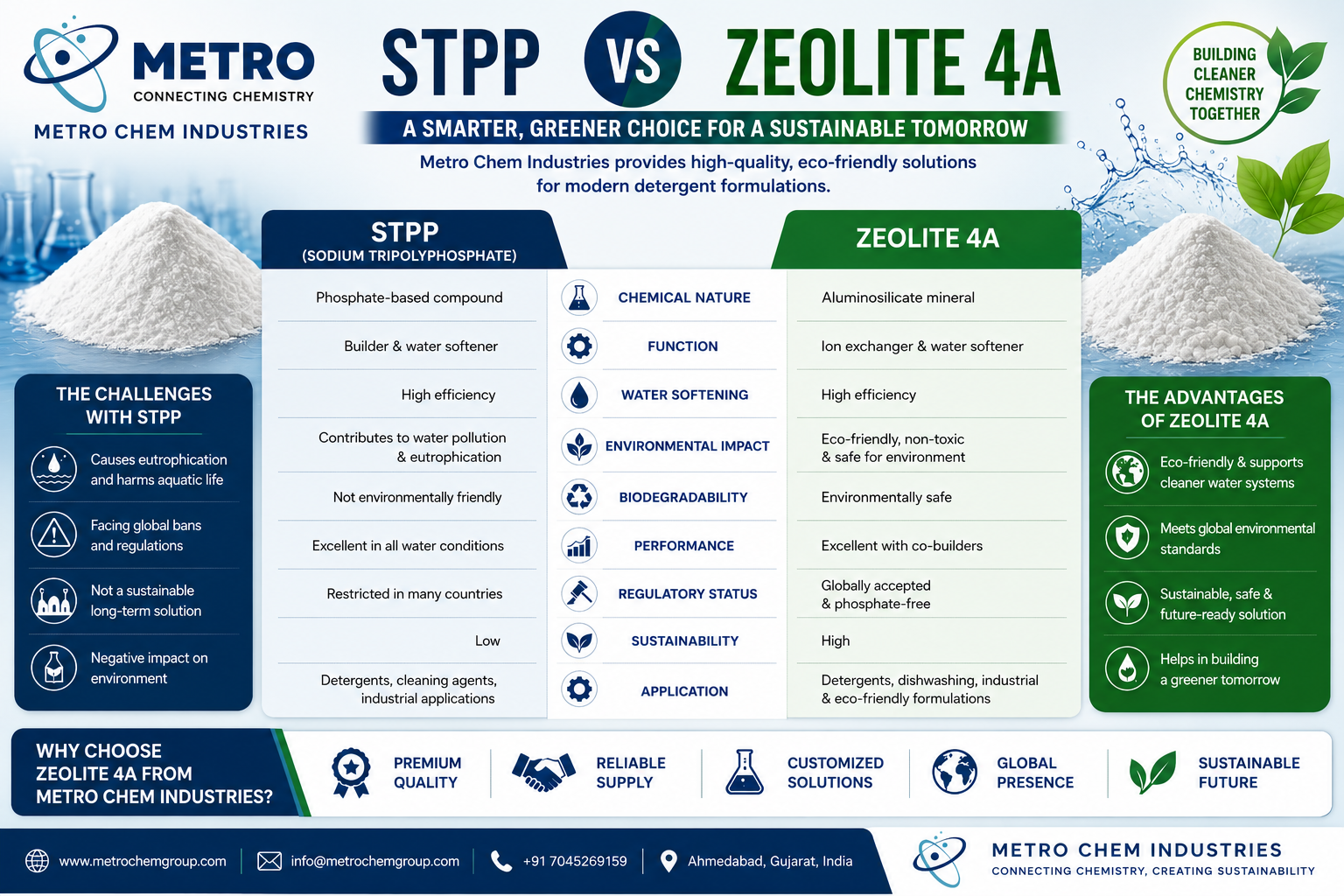
But there’s a side of STPP the formulation world had to eventually deal with. Once it goes down the drain, it doesn’t just disappear. Phosphates feed algae in rivers and lakes. The algae bloom, oxygen drops, and aquatic life suffers. It’s a slow problem and an invisible one, but it’s real. Countries started banning phosphates in detergents one by one, starting in Europe, and the trend kept going. It’s not stopping.
So what exactly is Zeolite 4A?
Zeolite 4A is a white crystalline powder made from aluminium, silicon, oxygen and sodium. It’s been around since the 1970s and it works through something called ion exchange. Hard water carries calcium and magnesium. Zeolite 4A grabs those ions and swaps them out for sodium. What you’re left with is softer water, which lets your surfactants actually clean rather than fight the minerals.
Here’s the thing people ask about most. Unlike STPP, Zeolite 4A doesn’t dissolve. It stays as fine particles through the wash cycle and gets rinsed away without leaving phosphate residues behind. That one difference is what made it the go-to replacement when phosphate restrictions started coming in.
The “4A” part refers to the pore size, which is 4 angstroms. That specific channel width is what makes it good at trapping the calcium ions responsible for most of the hardness in tap water. It’s a precise fit, not a coincidence.
Why manufacturers are actually making the move
Regulation is the obvious driver. The EU phased out phosphates in laundry detergents years ago. Gulf countries, several Southeast Asian markets and parts of Africa are moving the same way. If you want to export, or if you’re just watching where things are going, reformulating isn’t really optional anymore.
Performance was always the bigger concern for formulators. People worried Zeolite 4A wouldn’t hold up against STPP on cleaning results. In practice, those worries were overblown. Manufacturers who made the switch in the 90s and early 2000s found the products performed well. Customers didn’t notice much difference. What did matter was getting the formulation right, which takes some adjustment.
One thing worth knowing is that Zeolite 4A handles calcium hardness better than magnesium hardness. That’s just the chemistry. Most formulators pair it with sodium carbonate or modified sodium silicates to cover that gap. It’s a well-known workaround and most detergent chemists account for it from the start now.
Where the industry is right now
Europe is largely done with this transition. The question there isn’t whether to use Zeolite 4A but how to source it reliably and at the right quality. India is in the middle of the shift right now. Urban consumers are more aware of what goes into cleaning products, modern retailers ask questions about environmental compliance, and export requirements are pushing producers to clean up formulations anyway.
The manufacturers who are still on the fence tend to cite cost or familiarity. Those are fair points but they don’t hold up as well as they used to. Zeolite 4A supply has grown, prices have come down over the years, and there’s now enough technical experience in the market to make reformulation far less painful than it once was.
The honest reality is that STPP had a good run. It served the industry well. But the regulatory environment has changed, the alternatives have matured, and staying with phosphate-based formulations is becoming harder to justify on any front. Zeolite 4A isn’t a perfect drop-in replacement and anyone who says otherwise isn’t being straight with you. But it works, it’s clean, and it’s where the industry is heading whether you move now or later.
Metro Chem Industries manufactures Zeolite 4A for detergent and industrial use, supplied to customers across 52 countries. More at metrochemgroup.com
Frequently Asked Questions
Q1. Can Zeolite 4A fully replace STPP in a detergent formula or does it need other ingredients alongside it?
It can replace STPP as the main builder, but most formulators don’t use it completely alone. For water with high magnesium content, adding sodium carbonate or modified sodium silicate alongside Zeolite 4A gives better overall water softening. It’s less about Zeolite 4A being limited and more about getting the full formula to work for the specific water hardness profile in your market.
Q2. Is Zeolite 4A safe for skin and safe to use in household detergents?
Yes. Zeolite 4A has been used in laundry detergents for decades and has a well-established safety record. It doesn’t dissolve in water, so it rinses out rather than absorbing into fabric or skin. Regulatory bodies across Europe, North America and Asia have all reviewed it extensively. It’s one of the reasons it became the accepted alternative to phosphate builders in the first place.
Q3. Does switching from STPP to Zeolite 4A affect washing performance in cold water?
This comes up a lot and it’s a fair question. Zeolite 4A is somewhat slower to work in very cold water compared to STPP. For most household washing machines running at normal temperatures, the difference is minor and most consumers don’t notice it. If you’re formulating for markets where cold water washing is very common, it’s worth factoring into your testing, but it’s not a deal-breaker by any stretch.
Q4. What industries use Zeolite 4A beyond laundry detergents?
Quite a few. Dishwashing detergents use it for the same water softening reasons. It’s also used in petroleum refining, natural gas processing, plastics manufacturing and as a desiccant in packaging and refrigeration systems. The ion exchange and moisture adsorption properties that make it useful in detergents are just as valuable in those other applications.
Q5. Where can I buy Zeolite 4A in bulk and who are reliable Zeolite 4A manufacturers in India?
Metro Chem Industries is one of the leading Zeolite 4A manufacturers and suppliers in India, operating under the brand Zeolite MCIZA. Based in Ahmedabad, Gujarat, they supply to detergent producers, industrial buyers and export customers across 52 countries. If you’re looking for consistent quality, bulk supply and reliable dispatch, Metro Chem is a well-known name in this space. You can reach them directly at metrochemgroup.com or call +91-7045269159.
Looking for a Reliable Zeolite 4A Supply Partner