Most people in detergent formulation have heard the term “calcium exchange capacity” in supplier conversations or datasheets. But how many have stopped to ask: what does this number actually mean for my product on a wash day? If you’re choosing the wrong builder based on the wrong metric, your formulation is quietly underperforming — and nobody wants that.
Hard Water Is Not Your Friend
Tap water across most of India — and large parts of Asia, the Middle East, and Africa — carries dissolved calcium and magnesium ions. These make water “hard.” In a wash cycle, calcium ions bind to surfactants, reduce their effectiveness, and deposit on fabrics over time. Hard water quietly robs your detergent of its cleaning power. The builder’s job is to deal with calcium before it causes trouble.
So What Is Calcium Exchange Capacity?
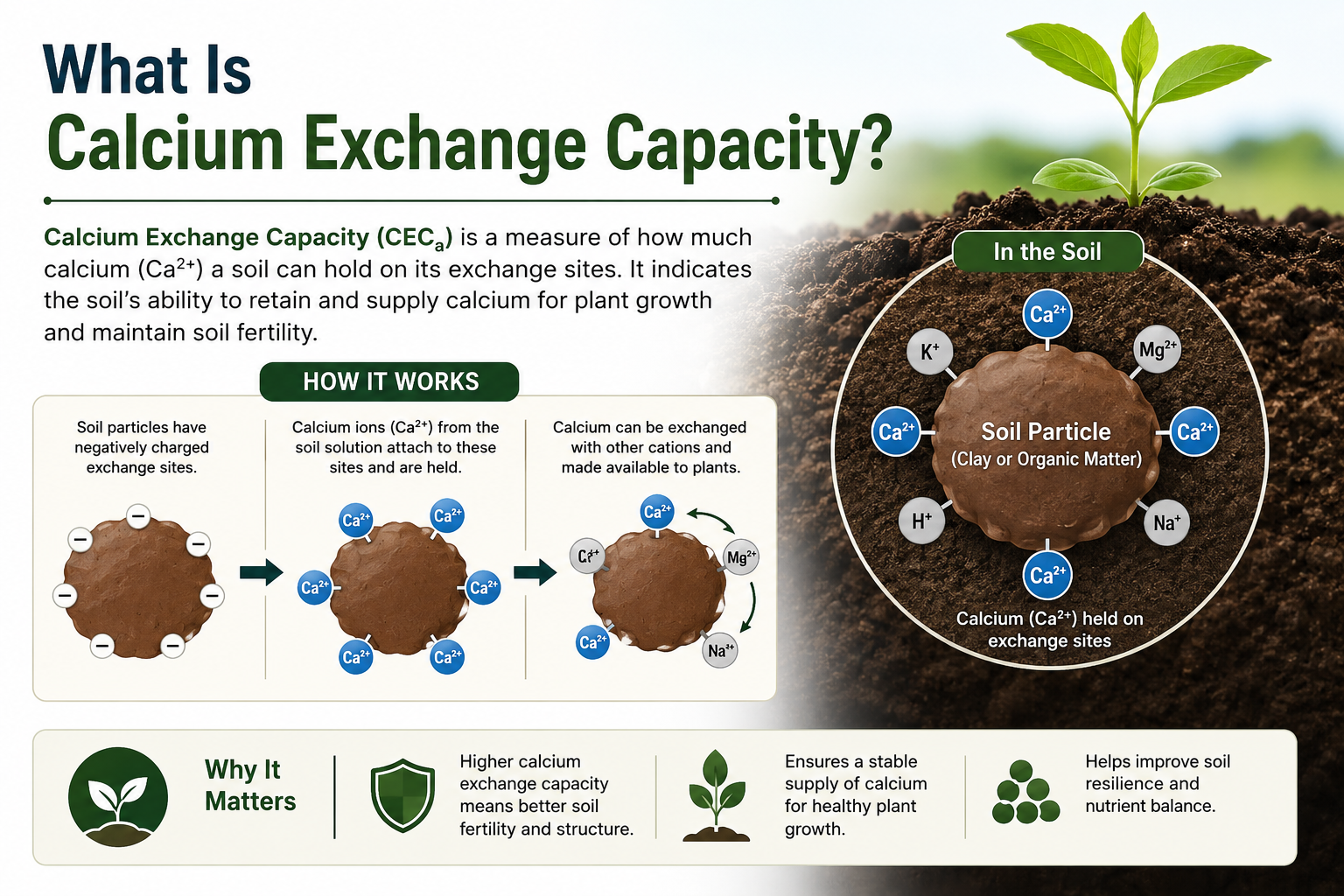
Calcium exchange capacity (CEC) measures how many milliequivalents of calcium a builder can remove from solution per gram. Put simply: it tells you how much hard water a builder can handle before it stops working.
Zeolite 4A — one of the world’s most widely used detergent builders — typically delivers a CEC in the range of 160–180 mg CaCO₃/g. That means one gram can neutralise the hardness of a substantial volume of hard water, quickly and reliably within a standard wash cycle.
CEC vs. Other Builder Chemistries: A Technical Comparison
Zeolite 4A vs. Sodium Tripolyphosphate (STPP)
STPP is a sequestrant, not an ion exchanger. It complexes calcium in solution, holding it in a soluble form. Its binding ability often exceeds 300 mg CaCO₃/g and acts almost instantly. However, phosphates cause eutrophication — excessive algae growth in waterways — leading many countries to restrict or ban them in household detergents. Zeolite 4A became the leading green alternative, with the trade-off being a slower exchange kinetic and the need for co-builders.
Zeolite 4A vs. Sodium Citrate
Citrate is biodegradable and increasingly used in eco formulations. Its CEC typically runs 100–130 mg CaCO₃/g — lower than zeolite — and it carries a higher cost per unit of calcium-binding performance. It works well in liquid detergents and cold-wash formats. For cost-sensitive powder detergent, zeolite remains the practical workhorse.
Zeolite 4A vs. Modified Sodium Disilicate (MSD)
Metro Chem’s Modified and Complex Sodium Disilicate chemistries work as hybrid co-builders — softening water partly through alkalinity and sequestration. Their contribution to CEC is supplementary, which is why they’re used alongside zeolite rather than as a replacement. MSD also delivers anti-corrosion protection for machine components, adding value in concentrated powder formulations.
Why CEC Numbers Alone Can Mislead You
Laboratory CEC doesn’t always translate one-to-one into washing machine performance. Three factors matter beyond the number:
Rate of exchange: In a short wash cycle, a builder with high theoretical CEC but slow kinetics may not fully utilise its capacity before the cycle ends. Zeolite’s exchange rate depends on particle size and crystallinity — which is why manufacturing quality from your supplier actually affects real-world performance.
Suspension stability: Zeolite must stay dispersed in wash water long enough to act. Poor particle morphology leads to rapid settling, reducing contact time and effective CEC.
pH interaction: CEC is somewhat pH-dependent. Understanding the interplay between your zeolite, sodium carbonate, and silicate levels is essential for a balanced formulation.
Metro Chem’s Zeolite 4A (MCIZA) is produced with controlled crystallinity and particle size distribution — because a number on a datasheet only matters if it holds up in the actual wash.
Frequently Asked Questions
Q1. What is the ideal CEC value I should look for in a detergent builder?
For a powder detergent targeting moderately hard water (200–400 ppm), Zeolite 4A with a CEC of 160–180 mg CaCO₃/g is generally sufficient. For very hard water regions (above 400 ppm), combining zeolite with a co-builder like MSD or sodium carbonate ensures complete calcium neutralisation at standard dosage weights.
Q2. Can I replace Zeolite 4A with citrate for a phosphate-free formula?
Yes, but with trade-offs. Citrate is fully soluble and biodegradable, making it excellent for liquid and cold-water formats. However, its lower CEC means you need higher dosage levels to achieve equivalent hardness removal, which increases formulation cost. For budget powder detergents in hard water markets, zeolite remains more cost-effective.
Q3. Does Zeolite 4A work effectively in cold-water washing conditions?
Zeolite 4A performs reasonably at lower temperatures, but its ion-exchange kinetics slow down in cold water. For cold-wash formulations (below 30°C), consider supplementing zeolite with a fast-acting sequestrant like citrate or a modified disilicate to ensure adequate calcium removal within the wash cycle time.
Q4. Is Zeolite 4A safe for the environment?
Yes. Zeolite 4A is inorganic, non-toxic, and does not contribute to nutrient pollution or eutrophication — the key environmental concern associated with phosphate builders. It exits the wash water as a harmless insoluble particle and is widely accepted by global environmental and regulatory standards as a phosphate replacement.
Q5. How does particle size of Zeolite 4A affect detergent performance?
Particle size directly affects the rate of calcium exchange. Finer particles provide greater surface area and faster ion exchange, which is critical in short wash cycles. However, very fine particles can settle quickly in liquid formulations. Metro Chem’s MCIZA is engineered with a controlled particle size distribution to balance exchange kinetics with suspension stability across powder and compact detergent formats.
Q6. What products does Metro Chem offer for detergent formulation?
Metro Chem Industries manufactures Zeolite 4A (MCIZA) as a primary builder, along with Modified Sodium Disilicate, Complex Sodium Disilicate, and Sodium Silicate Powder as co-builders and functional additives. These products are designed to work together in a balanced wash formula. We supply to detergent manufacturers across 52+ countries and offer sample requests for technical evaluation.
Reliable Zeolite 4a Manufacturers